
About Scott Murphy - Marketing & Brand Strategist
in Fort Lauderdale.
I've spent twenty years in marketing, across eight organizations and six industries, and the thread running through all of it is the same: I like the part where you have to prove it worked.
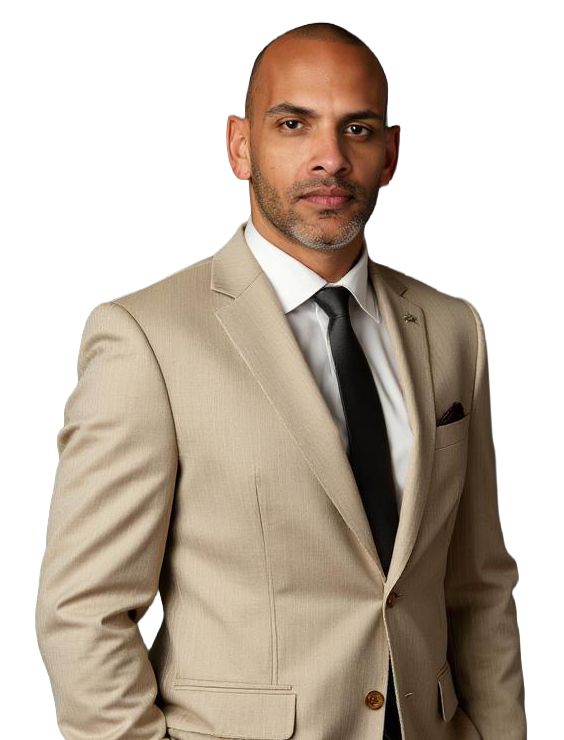
Where the Career Comes From.
The career in numbers is one thing. Here's the context behind how a journalism major from the University of Florida became a marketing strategist managing $56M budgets and building brands from scratch.
BS Magazine Journalism
Minor: Theatre · Class of 2004
Available locally and nationally
Full-time marketing leadership
I Started in Journalism.
Not Marketing.
I started in journalism. I studied magazine journalism at the University of Florida, minored in theatre, and ran the Orange & Blue Magazine as managing editor — which meant writing, editing, shooting photography, and laying out pages, on deadline, with no one else to hand it to. That training is still the most useful thing I own. It taught me to lead with the interesting part, to cut what isn't earning its space, and to be suspicious of any claim without a number behind it.
Journalism taught me that clarity is a form of respect. If your audience has to work hard to understand you, you've already lost them.
What I Have Actually Done.
I've built email and SMS programs for more than a million subscribers at DiscountMugs, where I took open rates from 14.8% to 22.6% and launched an SMS channel that produced $126,000 in its first three months. I've run full-funnel digital marketing across a portfolio of pharmaceutical brands at Tri-Source Pharma, growing organic traffic 36% year over year while cutting email bounce rates by 32%. I designed a bouquet collection at Sunshine Bouquet Company that sold more than $2.5 million in a single year — a reminder that marketing and product decisions are the same decision more often than either department admits.
Earlier, at Everglades Direct/ComplyRight, Inc., I ran multi-channel programs supporting a $56 million operating budget and pulled 30 days out of the catalog production cycle by rebuilding the workflow. At Newvue, I grew site traffic 200% and lifted email engagement tenfold in six months.
Since May 2025 I've operated as lead consultant at Axis Creative Consulting, running brand strategy, digital campaigns, and website projects for B2B and B2C clients across South Florida. I built the consulting process, the onboarding system, and the project workflows from nothing, and held client retention at 98%. It taught me more about marketing operations than any in-house role had.
What I'm Looking For.
A full-time in-house marketing role on a team where I can own outcomes rather than deliverables.
Consulting sharpened me, but the work I care most about is the work you can only do from the inside — sitting next to the sales team, watching how customers actually behave over quarters instead of engagements, and building something that compounds. I'm most useful to a team that's somewhere between "we have a marketing person" and "we have a marketing department": enough ambition to need real strategy, small enough that the strategist should also be shipping.
I'm based in Fort Lauderdale and open to roles across South Florida or fully remote.
How I Work.
The work I'm most proud of isn't the biggest budget I managed. It's the moments where a clear strategy, executed well, produced a result someone could point to and say: that changed something.
THE DIFFERENTIATIORS
What You Get When You Hire Scott.
Six things that distinguish how I think about marketing from how most people practice it — and why they show up consistently in the results.
I don't start building anything until I understand the goal, the audience, the competitive landscape, and the success metric. Most marketing problems are execution problems in disguise — but most execution problems are strategy problems that showed up late. The plan comes first.
A degree in Magazine Journalism from UF means I was trained to understand audiences, structure narratives, and communicate with precision. I write my own copy. I know what makes a headline land and what makes a message invisible. That training is the backbone of every brand project I've touched.
I measure what matters and report on what moves. +62% organic traffic. $126K SMS revenue in 90 days. 98% client retention. These aren't vanity metrics — they're the outcomes that the business cared about. I'm built for accountability, not attribution theater.
I'm not a strategist who hands off to an execution team, and I'm not an executor who waits for a strategy brief. I do both. Building the plan and implementing it means the gap between strategy and reality stays small — because the person who designed the plan is the one running it.
I've worked across pharmaceutical, e-commerce, consumer goods, hospitality, technology, and professional services. Each industry demanded something different — different audiences, different compliance environments, different channels. That range means I bring cross-industry pattern recognition to every new challenge without defaulting to category conventions.
Every engagement ends with the client better equipped than when we started — SOPs documented, playbooks built, team knowledge transferred. The goal isn't dependency; it's capability. At Tri-Source, the marketing infrastructure I built continued performing after I left. That's the standard.
See How These Show Up in Practice. Three full case studies -- strategy, execution, and the numbers -- so you can see exactly how these qualities produce results.
BY THE NUMBERS
A Career Measured
in
Real Outcomes.
The metrics that matter most across ten-plus years of marketing programs — not impressions, not engagement rates, but the numbers that actually moved the business.
HOW I WORK
Six Principles that Don't Move.
These aren’t values on a slide deck. They’re the principles that show up in every brief, every campaign, and every client conversation — whether the budget is $5,000 or $56 million.
Strategy Before Tactics
Every campaign, every event, and every decision starts with a clear understanding of the objective — because execution without strategy is just expensive activity.
Before a single asset is designed, a vendor is called, or an email is sent, I ask the question that separates good marketers from great ones: what are we actually trying to accomplish? Goals get defined. Audiences get identified. Success gets measured. Only then does the work begin.
This is the trait that separates senior marketers from junior ones — the instinct to resist the urge to start executing and invest the time upfront that makes everything downstream faster, sharper, and more effective.
The Audience Is Always First
Every message and every experience is built around one question: what does this person need to feel, know, or do — and what's the most effective way to get them there?
Marketing fails when it's built around what a company wants to say instead of what the audience needs to hear. Events fail when designed for the brand instead of the attendee. The audience-first mindset requires setting aside internal assumptions and building every program around the real human being on the other end of it.
This principle is what produces campaigns that convert, events that get talked about, and brands that earn loyalty — not just awareness.
Execution Is the Strategy
A flawless plan means nothing if the delivery breaks down. The gap between strategy and result is always filled — or lost — in the details of how the work actually gets done.
I've seen brilliant strategies collapse because someone didn't confirm the AV setup. I've seen mediocre ideas punch above their weight because the execution was relentless. The way work gets done is inseparable from the outcomes it produces. Quality control isn't a final step — it's a mindset that runs through every phase.
This is the principle that clients and employers remember most. Not the deck. The delivery.
Data Informs.
Instinct Leads.
Numbers tell you what happened. Experience tells you why — and what to do next. The best marketing decisions live at the intersection of both.
Every campaign I run has tracking in place before it launches. But data without context is just noise — and over-reliance on metrics causes organizations to optimize the wrong things with increasing precision. The craft of marketing requires knowing when to let the data lead and when to trust the instinct built from years of pattern recognition.
This balance — analytical rigor and creative conviction — is what separates marketing leaders who can grow a brand from those who can only report on one.
Details Are the Experience
In marketing and in live events, the difference between good and exceptional lives in the details most people never notice — and that every person feels.
The attendee doesn't consciously notice that the booth lighting was positioned to eliminate shadows, or that lead capture was designed to take under 30 seconds. But they feel all of it. The same is true in marketing — the CTA rewritten six times, the email that arrived Thursday instead of Monday. Details are invisible when they're right. They're everything when they're wrong.
This is what clients mean when they say they trust someone. It's not a natural talent. It's a discipline.
Accountability Is Non-Negotiable
I don't measure success by activity, effort, or intent. I measure it by results — and I hold myself to that standard regardless of the circumstances.
Marketing is one of the few functions where it's possible to stay very busy for a very long time without moving the needle. Every engagement I take on starts with a clear definition of what success looks like — and ends with an honest assessment of whether we got there. When results fall short, the answer isn't to spin the narrative. It's to figure out what happened and fix it.
Marketers who talk about effort are common. Marketers who own outcomes are rare.
Let's Talk.
If you're building a marketing team or looking for a senior marketing leader -- I'd like to hear about what you're working on. Schedule a conversation or connect on LinkedIn.